
Why the Cinema Stays With Us and How to Capitalize

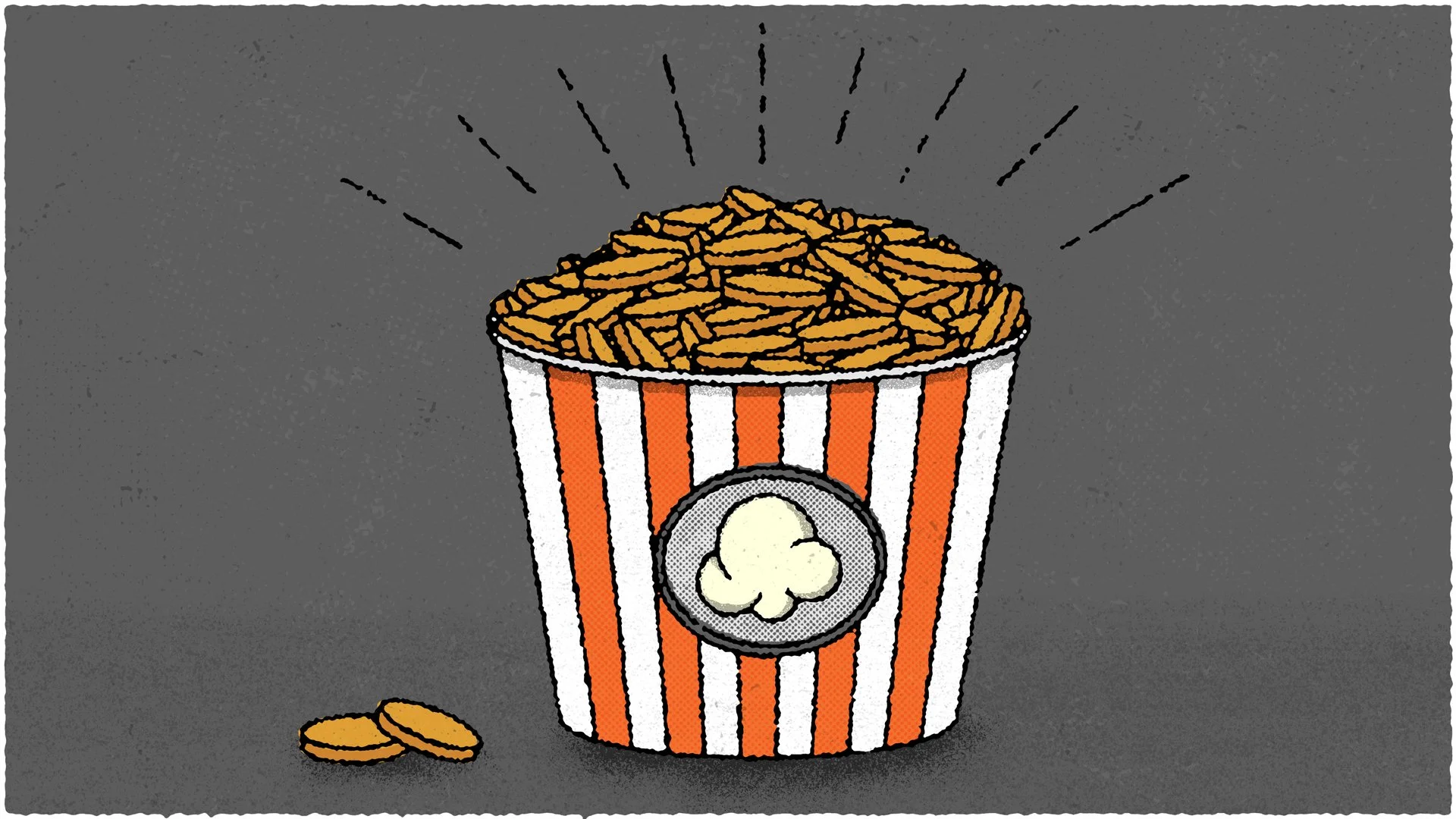
Shaping donor experience with attention, story and emotion.
Think of a favorite film, one you saw at the theater. Chances are, this exercise will evoke some vivid memories. Now think about the last movie you saw using a streaming service. While you may have enjoyed the movie, your recall of the experience won’t be the same. The details are fuzzier. The emotional recall just isn’t there.
I can remember crazy specific details about movies I saw in the theater. As a kid, I recall not just the movie, but what friends I went with, and whose mom drove us there. Thinking about my 20s, I can remember the first film screening I attended, my first art house film, and can even pair these experiences with what apartment I lived in at the time. The things I recall aren’t uniform, but the details of the glimpses fascinate me, like waiting for tickets in a long line down the sidewalk, thankful I wore my peacoat.
Turns out there’s a science that explains why seeing a movie in a theater is so much more impactful than watching one at home. And, like always, it holds a lesson for nonprofits. Most organizations don’t lose donors because people stopped caring; they lose them because the experience feels transactional, confusing or forgettable. Understanding how to make the donation experience more memorable, gratifying and appreciated is vital, now more than ever.
So, here’s what is playing out when we go to the theater, and how that can inform improvements in donor experience and stewardship.
1 |
Reduced Distraction
At the movies, we buy our tickets, settle in and turn our phones off.
Time slows down a little. (This makes me want to go right now.) The
lights are dim, and our focus is directed to a single large screen.
You can’t attempt to multitask. There are no interruptions.
|
2 |
Narrative Transportation
Reducing distractions sets us up for narrative transportation.
A good movie transports you well beyond thoughts about your best
friend’s daughter’s graduation gift or the fact that your car’s
oil change is overdue. You become emotionally invested in
the characters.
|
3 |
Emotional Contagion
My favorite part of seeing a movie in the theater is
when there are collective laughs, gasps or tears. Your
feelings are more intense because you’re feeling them in
community with others. This is also a nice reminder that
collectively, we have more in common than we think.
|
4 |
Peak End Rule
We don’t remember experiences evenly. At the movies,
we tend to recall the scene that hits hardest and the
ending. The ending often shapes how we feel about the
entire movie.
|
Given that the cost of acquiring a new donor is greater than the investment needed to maintain one, it’s important to ask if your donors are having a memorable experience or a forgettable one. If you think that your cause is so noble, donor experience doesn’t matter, think again.
The theater is not more memorable because of the movie; it’s more memorable because of the experience design. Too often, the donor experience is designed around the organization’s needs rather than the donor’s. Your donors don’t remember what they gave. They remember how giving made them feel. And that experience is yours to design.
Enjoy the show,
Kevin
