
Think big. Start smaller.

Big ambitions, small wins and a few pitfalls to dodge.
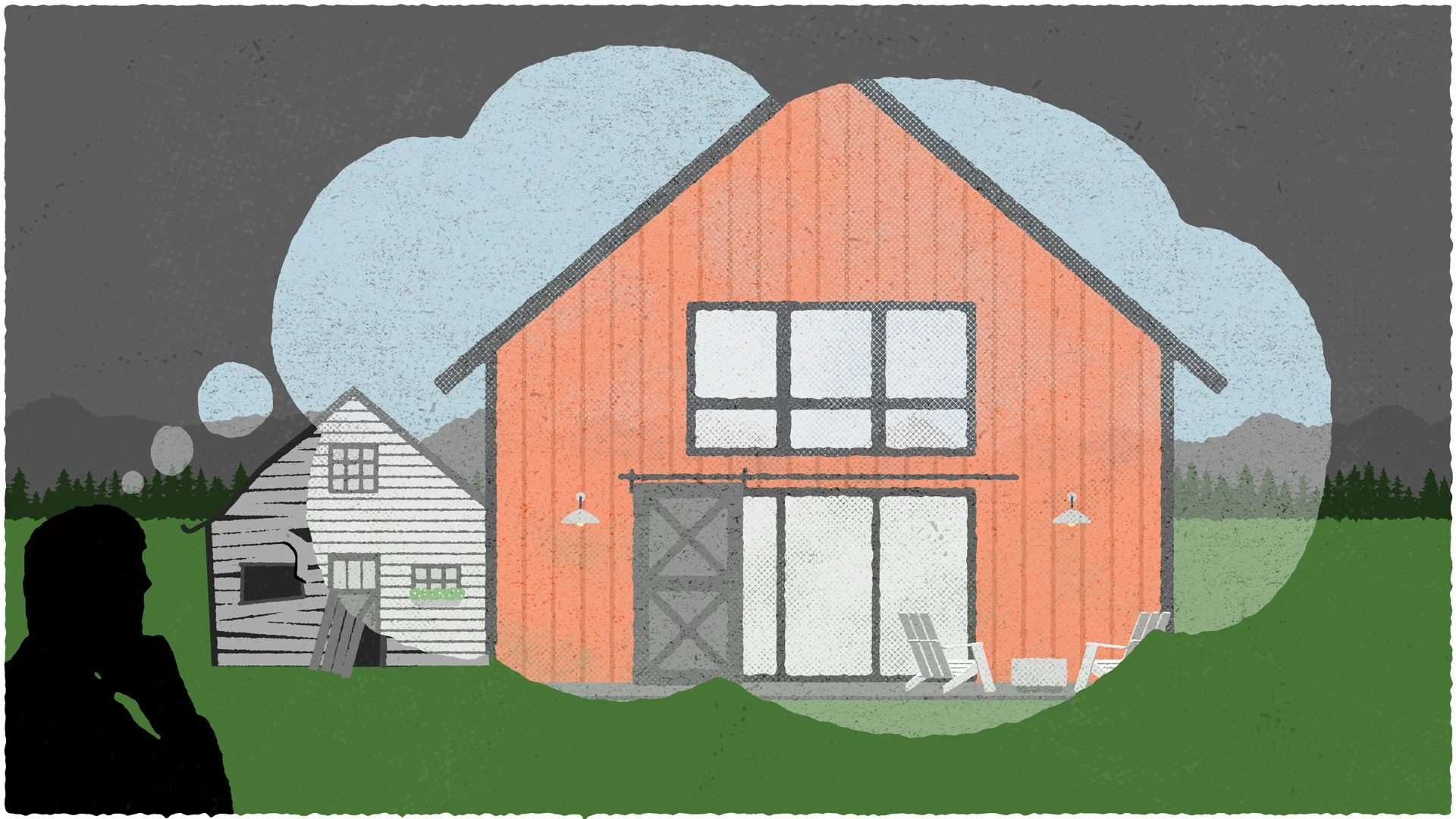
My love of home improvement is dangerous. I’ve tackled 20 years of projects on my almost 100-year-old house, and now there’s not much scheming left. This sent me dreaming about a getaway in the mountains of Western North Carolina. And that somehow led to me owning a patch of pasture and woods, complete with an uninhabitable shack.
It’s a whole new canvas, and imagining (and saving for) what could be is equal parts overwhelming and exhilarating. I’m prone to blue-sky thinking that leads to plans that might come to fruition by the time I’m in my mid-90s. My dance between vision and attainability made me think about how cause leaders tend to do the same thing. They dream big, which is good, but sometimes the dreams are so big that they make the path forward insurmountable for themselves and for their supporters.
In behavioral science terms, this is called perceived efficacy. When a problem or opportunity feels too large or distant, it becomes harder to believe that any single action will make a difference. This is especially relevant right now, as the problems you and I are working to solve are getting bigger; meanwhile, the systems designed to mitigate them are underfunded and failing. It’s a dangerous intersection where compassion fatigue lurks. As the size of the problem grows, the willingness to act doesn’t scale proportionally.
It reminds me of a study I read about years ago, where researchers tested a fundraising appeal for African famine relief. People consistently gave more money when shown an image of a single named child rather than being shown photos of multiple children or statistics about millions at risk. A single child is actionable. A large group is insurmountable.
A dose of compassion combined with zeal can easily lead to the following communications mistakes. Here’s what to avoid and what to do instead.
Mistake #1
Leading with the size of the problem.
We think big stats convey significance and urgency when they actually do the opposite, making the problem feel unsolvable. Instead of going big, define a specific problem that feels within reach. For example, help 25 families secure stable housing.
Mistake #2
Asking for broad, undefined support.
Your job is to see the complexity of the problem, but you don’t want to confuse or complicate your message. So, asking people to “create change” or “support the mission” seems less burdensome. But this is asking more of your audience, not less. Instead, tie giving to a specific outcome. For instance, $5,000 covers a year’s tuition.
Mistake #3
Framing success abstractly.
An aspirational goal like ending homelessness may seem visionary, but it’s too remote. If you communicate in terms that aren’t likely to happen in our lifetime, you’re leaving people behind. Instead, build momentum and engagement by breaking your vision into near-term, achievable steps, such as: “Move one person into permanent affordable housing.”
Mistake #4
Relying on urgency alone.
I understand the severity of what’s at stake. And with some issues, advocacy efforts in particular, the need is both time-sensitive and repetitive. But people become desensitized over time, and the need becomes a burden your supporters no longer want to bear. Clarity is your way out of this. Lead by explaining what your supporters’ actions will accomplish.
Mistake #5
Emphasizing scale over solvability.
I get it, you’re doing big things, helping many, and you want people to know it. Everybody likes success. Unfortunately, scale without context feels impersonal and unmanageable. Instead, make both the impact and the donor’s action feel personal. Tell human stories about the people you are helping and show donors what their support made happen.
I love thinking big, but it’s important to remember that big wins are nothing but an accumulation of much smaller ones. As for the mountain place, I’m starting with a barn. Well, it’ll be an art studio with a bedroom and a kitchen, but it’ll look like a barn. That way, I can imagine the house on-site and have somewhere to stay when the time comes to build.
Enjoy the journey,
Kevin
