
The work between the extremes.

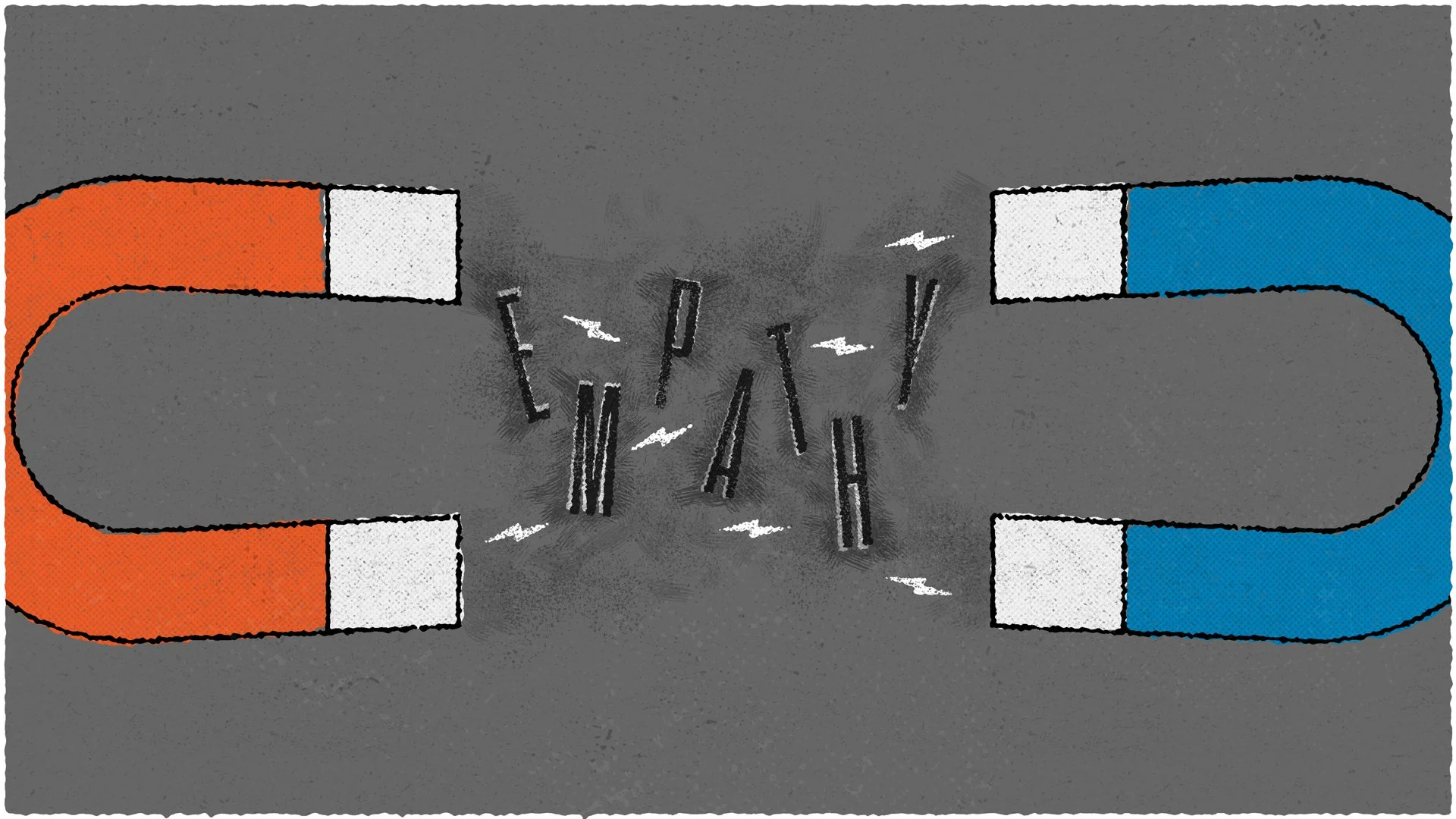
Leading in an era of division.
It’s not just odd when the tables are turned, it’s uncomfortable. Instead of being the consultant, I was the client, and my first step in getting some executive coaching was a personality test. I’ve done most of them: Myers-Briggs, StrengthsFinder, DiSC profile, Enneagram. But this test was next level. Hundreds of questions followed by an extremely detailed analysis. That hard of a stare in the mirror can be tough, and I had to remind myself that we all have good and not so good traits.
It still hurt. My shortcomings were laid bare. But there was a bright spot amidst them. Where I blew the test out of the water was in empathy. I’ve always been interested in why other people think or act the way they do. And in most cases, I can understand another set of motivations, even when I disagree. But despite my 98-percentile empathy score, objectivity is getting more difficult now. Polarization has become extreme. And it has crept into everything.
Issues that were once broadly supported, such as public health, education access, poverty alleviation, disability services and environmental protection, have been pulled into ideological battles. Many nonprofits have become casualties in culture wars they didn’t start. Polarization has eroded trust in institutions of all kinds, making fundraising more difficult and internal culture more challenging to uphold. Boards have been divided. Executive directors and CEOs hesitate and delay decisions to avoid backlash.
So where do we go from here?
Unfortunately, we can’t resolve our country’s conflict overnight. Our path to today’s factions has been long, and its resolution will likely be as well. But nonprofits can take a few simple steps toward consensus, building momentum along the way. Here are three ways to start.
1 |
Lead with outcomes, not positions.Polarization thrives on labels and intentions. Credibility is built on results. Lower the temperature by consistently anchoring communication in outcomes rather than ideology. Outcomes give people something concrete to agree on, even when their opinions differ. Instead of framing your mission around beliefs, frame it around what changes because of your work. Lives improved. Barriers reduced. Systems strengthened. When you stay disciplined about results, you make it harder for others to project political meaning where none exists. |
2 |
Demonstrate empathy without putting on a show.Empathy is often assumed but rarely demonstrated explicitly. Acknowledge that reasonable people can come to different conclusions. Name concerns before dismissing them. Use language that signals understanding, even when disagreement remains. This isn’t about neutrality for its own sake. It’s about psychological safety. When people feel seen and heard, they’re more willing to listen. |
3 |
Be steady when others are reactive.Polarization thrives on speed and outrage. You can earn credibility by resisting both. This means slowing down responses, avoiding emotional dialogue and speaking with consistency over time. Steadiness communicates confidence, signaling that your organization is on mission. The longer our landscape is shaped by extremes, the more opportunity nonprofits have to stand apart by remaining stalwart. |
In Practice
Occasionally, I’ll share work my colleagues and I have done when it illustrates the ideas discussed in these articles. Autism and its treatment have become an increasingly polarized topic. Our dialogue with parents on behalf of the Council of Autism Service Providers leads with empathy.
The extremes might get all the attention, but most people (and most donors) live in the middle. Most nonprofits serve diverse populations, depend on broad coalitions and operate in the practical middle, not the ideological edges. Empathy is the core component of the causes we’re advancing, and those causes are fueled by the hope that things will improve. Let’s not lose either as we navigate such sad and disturbing times.
With resolve,
Kevin
