
The moment we decide.

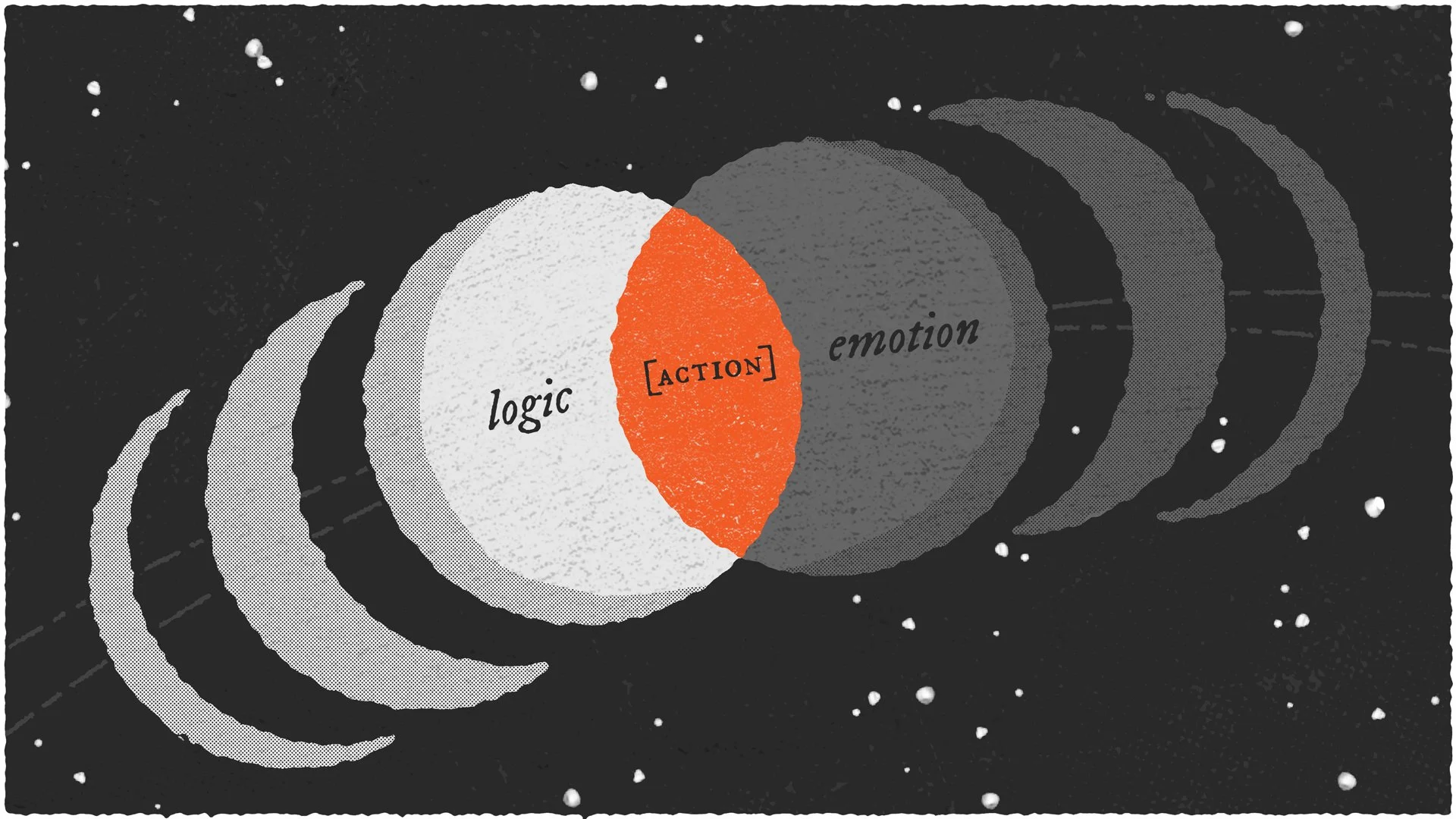
How consideration gives way to commitment.
It was New Year’s Day, 2006. Unseasonably warm for January, even in South Carolina. I put the top down, whistled for the dog to hop in the car and drove off to explore different parts of town. I knew that I wanted to make the move from renter to homeowner, but I wasn’t quite ready. This was due diligence. I was just going to get a feel for pricing.
I spent the afternoon driving through one neighborhood after another looking at houses. It’s funny what goes through your mind during an exercise like this. Too big. Too ugly. Needs too much work. Who would choose that paint color? There was nothing to get excited about. Good.
Hours later, just as it was time to head home, I came to a four-way stop and spotted a discreet “for sale by owner” sign. Pulling in front of the house, I said aloud: “Well, this is it.” Fast forward a few months, and I’m thanking the movers and handing them a check. Then I’m standing in my living room, alone, surrounded by boxes, rolled up rugs and paintings.
Enter panicked inner monologue: “What was I thinking?” “I have absolutely no business buying anything that costs this much.” “Starting today, I will only eat ramen.”
Anxiety accompanies milestones, it also delays them. We wrestle with some decisions for months. Others are sudden. As we begin the new year, it’s interesting to reflect on what we’ve accomplished and what has yet to be done. For many, 2025 was (understandably) a year of hesitation. So, let’s do something different. Let’s begin 2026 by considering what prompts decision-making, because progress demands it.
Behavioral science tells us that big decisions rarely hinge on logic alone. In fact, the larger the decision, the more likely it is that subconscious forces are doing the heavy lifting. Here are four principles that often determine when deliberation gives way to action.
1 |
Emotional TaggingEvery option we consider carries an emotional imprint. Some feel heavy or draining, others feel unexpectedly right. In high-stakes decisions, these emotional signals often outweigh spreadsheets and scenarios. When something “clicks,” as it did when I first saw my house, it’s usually because emotion and logic briefly align. That clarity creates momentum where analysis alone could not. |
2 |
Commitment MomentumAction breeds confidence, not the other way around. Once we take even a small step toward a decision, momentum builds. A conversation, a visit, a draft plan. In my case, it was calling the number on the for-sale sign. Each move reduces uncertainty and increases psychological investment. What once felt overwhelming begins to feel inevitable. Progress, it turns out, is often the catalyst for belief. |
3 |
Identity AlignmentWe are far more likely to commit when a decision feels consistent with who we believe ourselves to be or who we are trying to become. Behavioral scientists call this identity-based motivation. When a choice reinforces our sense of self, it feels affirming rather than risky. The decision stops being transactional and starts being personal. “This is the kind of leader I am.” “This is how we operate.” Once that alignment is felt, action follows quickly. |
4 |
Anticipated RegretSometimes the final push comes not from confidence, but from imagination. Anticipated regret is the forward-looking emotion that asks, “How will I feel if I don’t do this?” When the discomfort of future regret outweighs the discomfort of present risk, hesitation gives way to resolve. Many big decisions happen suddenly, not because new information appears, but because waiting starts to feel more costly than acting. |
It’s been 20 years since I moved into my house, and I love it more now than I did the day I first saw it. Not just because I bought it, but because I kept choosing it. The renovation that felt daunting. The landscaping that took longer than planned. The outbuilding that seemed ambitious at the time. Each decision made the house more useful, more personal and more mine.
After the year we’ve had, it’s easy to default to caution. To stick with what’s familiar. But the strongest nonprofit leaders I know are always pushing forward. They demand better outcomes, clearer communications and more ambitious fundraising/grantmaking because the work requires it. When decisions are guided by vision, purpose and instinct, they tend to settle differently. With time, what once felt uncertain often becomes simply the next right step.
Toward what’s next,
Kevin
